
From the blog
Logo Bars, Experts and Bonus Stacks
A supplement sales page usually contains more credibility furniture than evidence. Institutional logos imply endorsements nobody gave; portraits imply expertise nobody claimed; avatars imply reviews nobody wrote; and a stack of free ebooks raises the apparent value of an order without changing the product. Each is legal, each is common, and each can be read in about five seconds once you know what it is.
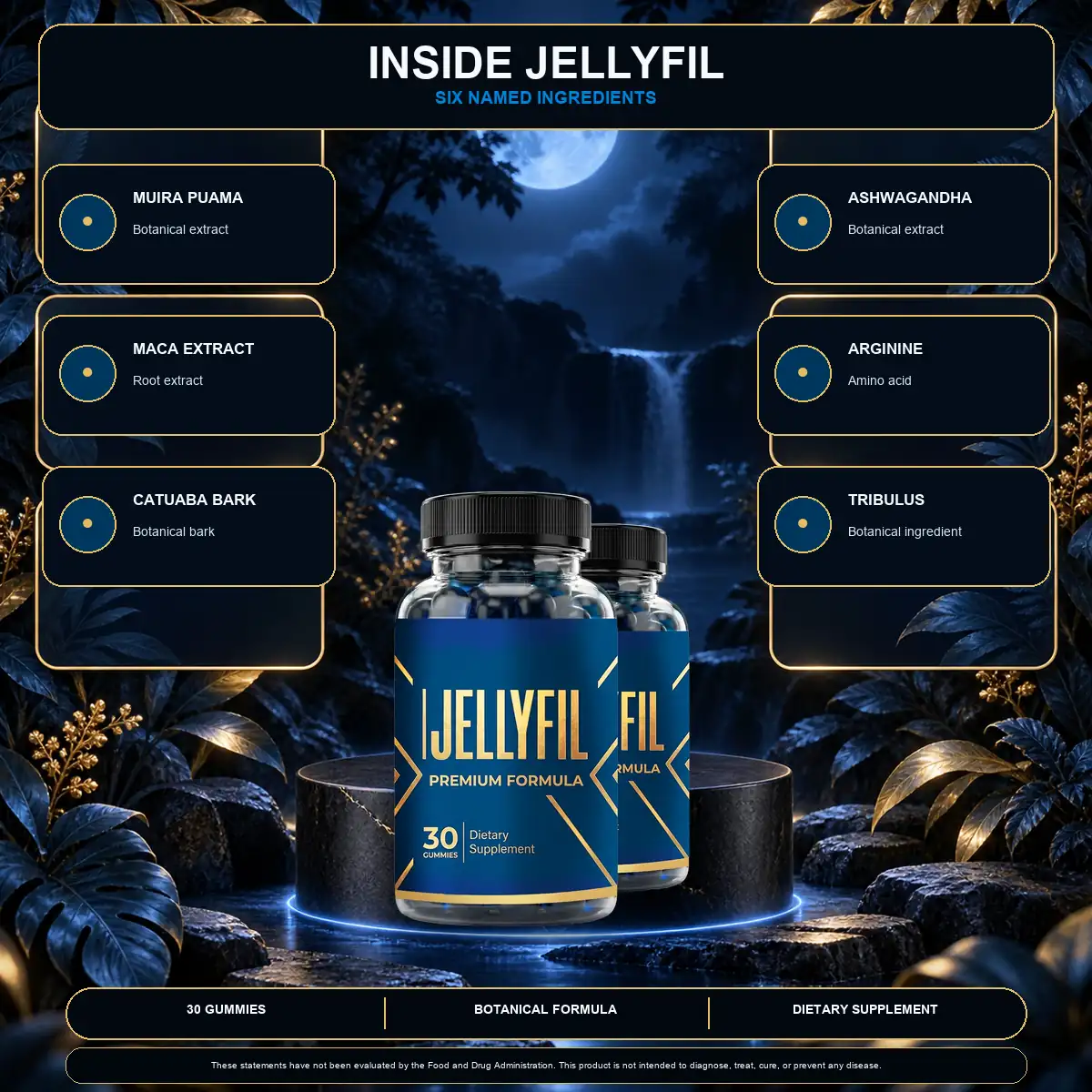
Credibility is cheaper than evidence
Every page, every journal post, the bottle facts and the ingredients go through review by Dr. Rachel Rubin, MD before they ship. Evidence for a supplement is expensive. A randomised trial of one ingredient at one dose costs six figures and takes a year, and it might not say what you hoped.
The appearance of evidence is nearly free. A logo is a file. A portrait is a stock licence. A bonus ebook is a PDF. A five-star average is a number typed into a template.
That price difference is the whole explanation for how these pages are built, and it is why the same five devices turn up on almost every one of them. Below is each device, what it actually is, and how to read it.
1. The logo bar
A row of famous institutional marks, usually placed high on the page, often under a line like “as featured in” or “science-backed formula” — or under nothing at all.
The asset folder that came with Jellyfil contains five: Harvard University, the National Institute of Mental Health, the National Center for Biotechnology Information, PubMed.gov and The Lancet Planetary Health. We have named them on this site and not reproduced them, because printing them would repeat the implication.
Here is what each of those things actually is. A university does research and does not endorse products. NIH is a government funder and research institute whose policy is explicit that its name and logo may not be used to imply endorsement. NCBI is a library service, and PubMed is its search interface — appearing in PubMed means a paper exists, not that anybody approves of anything. The Lancet Planetary Health is a peer-reviewed journal, and journals publish research rather than endorse supplements.
The honest alternative is a citation. A journal name, a year, a dose, a number of participants, and a link you can open. That takes one line, and when a product has it, the page usually leads with it rather than with crests.
2. The expert portrait
A photograph of a person in a white coat or a professional setting, sometimes captioned with a name.
The Jellyfil image set contains two: a man in a white coat holding the bottle, and a portrait captioned with a person’s name. Neither arrives with a credential, an institution, a qualification or a single sentence of opinion attributed to that person.
A stock photograph of a doctor is a photograph of a model or of a doctor who licensed their image for general use. It carries no opinion about the product it is standing next to. A captioned portrait is one step further: it invites you to read a name as an authority without stating what the authority is.
| What you see | What would make it evidence |
|---|---|
| A white coat | A name |
| A name | A credential and an institution |
| A credential | A statement, attributed and dated |
| A statement | A disclosure of whether they were paid |
| All of the above | Now it is an endorsement you can weigh |
The FTC’s endorsement guides are the plain-English standard, and they are short enough to skim: an endorsement should reflect the honest opinion of the endorser, and material connections should be disclosed (Federal Trade Commission, “Guides Concerning the Use of Endorsements and Testimonials in Advertising”).
3. The review furniture
The Jellyfil pack includes a 4.7-star average, an order count, eight written reviews and a “social proof” graphic showing three men holding the bottle.
The written reviews repeat a template we have seen in other packs — the same sentence structures, the same name-and-city pattern, the same star distribution, the same “wanted more in week one” phrasing. The photographs arrive as artwork, unattached to any name, date or order.
None of that is evidence about the product, and it is why this site publishes no rating at all. A star average is a summary of reviews; if the reviews are template copy, the average summarises nothing.
Look for dates
A burst of reviews within a few days is a template being filled in.
Look for repeated phrasing
Real reviewers do not share sentence structures.
Look at the three-star reviews
They are usually the most honest, and their absence is informative.
Look for an order link
A review tied to a verifiable purchase is a different object from a paragraph in a box.
Look at the faces
Reverse image search is free and takes ten seconds.
4. The bonus stack
Jellyfil comes with four free digital ebooks: a power challenge, a personalised usage guide, a relationship guide and an adult positions guide.
A digital bonus costs the seller nothing to duplicate, so it can be added to an offer without changing its price. Four of them raise the apparent value of the order and leave the product untouched. The files are real and you do receive them; that is not the issue.
The issue is what the stack is doing in the layout. It usually sits directly above the price, and it is usually larger and brighter than the ingredient panel. It is there to change the arithmetic you do in your head at the moment of deciding.
The test takes five seconds: imagine the ebook on its own, with no bottle attached, and name the price you would pay for it. That number is what the bonus is worth to you. Then judge the product on its panel, which is the part you swallow.
And notice which of the four is really doing the work. A “personalised usage guide” for a product whose instruction is “take one gummy once daily” is an ebook expanding a sentence. The adult guide is the one aimed squarely at the worry that brought most buyers to the page — which is also the claim the bottle itself does not make.
Skip the furniture and read the Jellyfil panel.
Check today’s price5. The mechanism illustration
A stock medical rendering: a translucent human figure with organs glowing, or a laboratory bench with blue lighting.
The Jellyfil set contains both. Neither depicts this product, because no study of this product exists. They are visual shorthand for “scientific”, and they are effective precisely because they do not make a claim that could be checked.
This is the mildest device on the list and the hardest to object to, because everybody knows a stock image is a stock image. It is worth naming only because of where it sits: usually immediately beside the words that are claims.
Reading a sales page in two minutes
Here is the whole method, in order. It works on any product in this category.
| Step | What to do | What you learn |
|---|---|---|
| 1 | Scroll straight past the hero and the logo bar | Nothing there is checkable |
| 2 | Find the Supplement Facts panel | This is the only regulated document on the page |
| 3 | Read the amounts, or find out there are none | Whether the product can be compared with research at all |
| 4 | Compare each amount with the studied dose | The actual answer |
| 5 | Read the other-ingredients line | Gelling agent, sweetener, allergens |
| 6 | Find the phone number and the returns address | Whether there is anybody to call |
| 7 | Now, if you like, read the rest | Knowing what each device is |
What an honest page would do instead
It is easy to list what is wrong and harder to say what right looks like, so here is the alternative, which is not complicated.
An honest page prints the amounts. It cites studies with doses and links. It names the doctor if there is one, and says nothing about doctors if there is not. It shows reviews tied to orders, including the bad ones. It states what is not known. And it publishes a certificate of analysis, or explains why it cannot.
None of that requires a crest, a portrait or an ebook. It requires a product the page is not embarrassed by, and a willingness to be specific (Federal Trade Commission, “Health Products Compliance Guidance”).
The bottom line
Institutional logos imply endorsements nobody gave. Portraits imply expertise nobody claimed. Avatars imply reviews nobody wrote. Bonus stacks raise the apparent value of an order without changing the product. Stock renderings imply research nobody did.
All five are legal, all five are cheap, and all five appear on the material that came with this product.
None of them tells you anything about what is in the gummy. For that there is one document, it is on the back of the bottle, and on this product it says 82 milligrams shared between nine names (U.S. Food and Drug Administration, “Dietary Supplements: What You Need to Know”).
Sources
- Federal Trade Commission. Guides Concerning the Use of Endorsements and Testimonials in Advertising. FTC, current revision. Checked September 24, 2026.
- Federal Trade Commission. Health Products Compliance Guidance. FTC business guidance, current revision. Checked September 24, 2026.
- U.S. Food and Drug Administration. Dietary Supplements: What You Need to Know. FDA, current revision. Checked September 24, 2026.
- National Institute of Diabetes and Digestive and Kidney Diseases. Erectile Dysfunction. NIDDK, current page. Checked September 24, 2026.
Questions on this topic
More answers on the full FAQ page.
Does a university logo on a supplement page mean anything?
No. Universities publish research; they do not endorse products, and their logos are not licensed for that purpose.
What about NIH or PubMed logos?
NIH is a research funder and institute whose policy forbids using its name or logo to imply endorsement. PubMed is a search index of published papers — appearing in it means a paper exists, not that a product is approved.
Is a stock photo of a doctor misleading?
On its own it is decoration. It becomes misleading when it sits next to a claim and invites you to read it as professional agreement.
Are free bonus ebooks a scam?
No. The files are real. They simply say nothing about the product, and their stated dollar values are chosen rather than measured.
What should I actually read on a sales page?
The Supplement Facts panel, the other-ingredients line, the returns address and the phone number. In that order.
Ready to try Jellyfil?
Pick a pack and see the price at checkout. The money-back guarantee is 60 days from purchase, unless the sales page prints a longer window. Questions first? Contact the order desk.
Sold through a U.S. stocking partner for Jellyfil. This site is not the manufacturer and earns when you buy.Keep reading
How to read a proprietary blend
What a proprietary blend hides, the two things it still tells you, how to work out an ingr…
Read more →Why one formula has several names
White-labelling explained: how one formula reaches a shelf under several brands, how to sp…
Read more →Jellyfil ingredients
All nine names inside the blend, one by one.
Read more →